Sunday, July 28, 2013

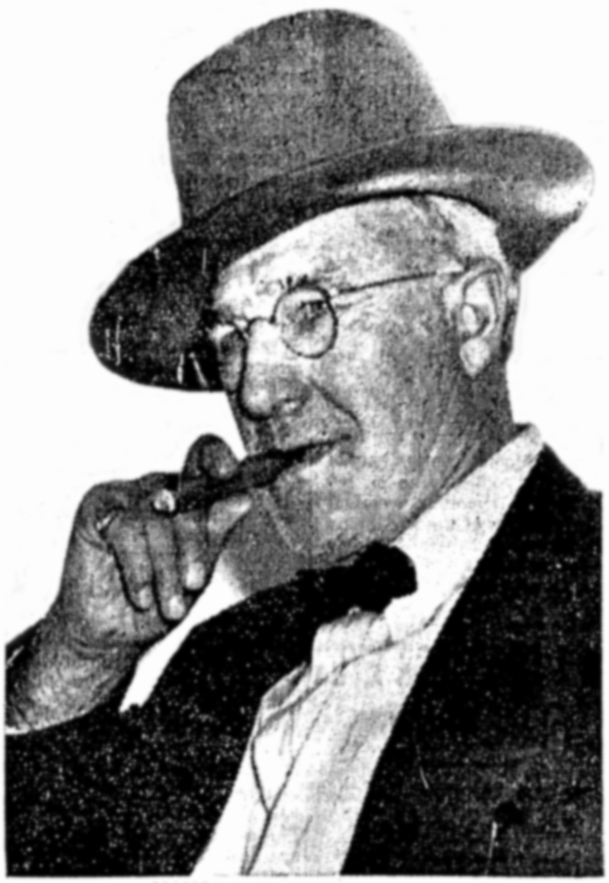
Charles Arden Muehleisen, 1920-2013

Charles Arden Muehleisen (1920-2013)
My first cousin twice removed Charles Arden Muehleisen passed away on July 11, 2013, at his home in Cortland, Ohio.

Charles was born July 11, 1920, in Cuyahoga Falls, Ohio. Our common ancestors were his grandparents William Malcolm McNaughton (1850-1914) and Mary Elizabeth Grant McNaughton (1856-1946), his mother's parents. They were my great-great-grandparents, my father's father's mother's parents. By profession Charles was an architect and ran his own firm for twenty-five years, before retiring in 2001. He served in the US Army in World War II and was active in several community organizations, including the Warren (Ohio) Rotary, the Boy Scouts, and the First United Methodist Church of Warren. I never met him.

Charles married Peggy E. Patton (1918-1992) in 1948. They had two daughters, Debra Elayne Muelheisen Rodriguez, who passed away in May 2012, and Beth Arden Muehleisen Ensign, who put together with her niece Barb Rodriguez and her son Andrew Ensign a lovely memorial video, which you can view here.

A memorial service was held on July 18. The family suggests memorial donations to the First United Methodist Church of Warren, 309 N. Park Avenue, Warren, Ohio 44481, or to The Rotary Club of Warren, P.O. Box 68, Warren, Ohio, 44482.

Sunday, July 14, 2013

Spirit of Finland

The Finnish Heritage Museum in Fairport Harbor, Ohio, is planning to erect a sculpture at the front of the museum. Titled "Spirit of Finland," it has been designed by Ken Valimaki, a 1955 graduate of Fairport Harding High School. The Finnish Heritage Museum website has a photo essay of the sculpture in progress. You can see that here.

Funds for the sculpture itself are in place, but additional funds for the base, the security system, and the lighting still need to be raised. Any amount you might wish to donate is welcome. The names of all donors at any level will be recorded in a memory book at the Finnish Heritage Museum. Donors at the $250 to $499 level will also have their names listed on a plaque outside near the sculpture. Donors at the $500 plus level will have their names listed on that plaque in larger type. Click here for the online donation form.

I have strong connections to Fairport Harbor, Ohio. Many of my maternal relatives were immigrants from Finland who ended up in Fairport. I've visited Fairport many times and still have many relatives there and in the area, including the current vice-president of the Finnish Heritage Museum, Ken Quiggle.

I'm proud to say I've written my check for a donation to the Spirit of Finland fund. Whether you're the descendant of Finnish immigrants to the USA or interested in preserving immigrant history or simply an art lover, I hope you'll consider donating, too.

Sunday, May 5, 2013

My Famous Relatives: Mayor Piola L. Leifer

Mayor Piney Leifer (1873-1942) in a 1938 newspaper photo.
My first entry in this "Famous Relatives" series of blog posts was about the actor Richard Gere. But the majority of my famous relatives are nowhere near as famous. Famous is an elastic term. For the purposes of this blog, I’m going to consider someone famous as long as that person performed some sort of career or accomplishment in the public eye, even if that public was relatively local.

My first cousin three times removed, Piola Leroy “Piney” Leifer (1873-1942), was the mayor of the small town of Brewster in Stark County, Ohio, where he lived virtually his whole life. He first won election as mayor in the fall of 1930 for the term that began January 1, 1931. Evidently he was quite popular with the voting citizens of Brewster, since he was re-elected five more times. He filled the office of mayor for six consecutive terms until his death in 1942 interrupted the sixth term.

Piney Leifer was born in Justus, Stark County, Ohio, the child of Swiss immigrant Jacob Leifer (1842-1922) and his wife Katharine Ann Werstler Leifer (1839-1904), and he was the nephew of my great-great-grandmother Louisa “Lucy” Leifer Shanower (1856-1916). Before he entered politics, Piney was a farmer and a prominent horse and cattle dealer. I don’t know why he left that career to run for mayor of Brewster, but the timing of the career change suggests that perhaps his horse and cattle business was hit hard by the Great Depression.

The Depression years of the 1930s were difficult all across the USA, but Mayor Leifer performed the feat of keeping the village of Brewster financially solvent throughout his mayoralty. Only a few other Ohio municipalities of that period could boast the same feat. During Piney Leifer’s administration Brewster, Ohio, built a waterworks system, sanitary sewers, a sewage disposal system, and a municipal building. Brewster paid off the debts from this construction and built up its bank account.

Mayor Leifer also had the village implement a locally operated power system, distributing power purchased from the Ohio Public Service Company to residents. The income to the village from resales of power funded village improvements, but after the new municipal building was paid for, the village cut the charge for power by fifty-five cents a month for average consumers.

These accomplishments during one of the worst economic periods in US history gained Piney Leifer statewide prominence. He explained his successful guidance of Brewster like this: “The real secret of municipal financing is to get at least seventy-five cents value out of each dollar spent.  Here in Brewster we try to get a value of at least eighty-five cents on every dollar we use.”

Several months after Piney Leifer was elected mayor of Brewster for his sixth term, he grew ill. He never married, so he moved in with his sister Celia Catherine Leifer Roush (1876-1948) and her husband Andrew Jacob Roush (1874-1954). Nine months later, on December 16, 1942, he died at their Brewster home.

His successful guidance of the village of Brewster through the tough Depression years became his legacy. “Think how much interest would be saved if municipalities bought things only when they could pay cash for them,” he was quoted in the Canton [Ohio] Repository, October 9, 1938. “We pay as we go—that’s our system.” Still good advice—and not just for municipalities, but for individuals, too.

Thursday, May 2, 2013

The Mystery of Henry Shanower: A Solution

In my very first post for this blog, I asked the question: “Who was Henry Shanower?” That’s a question that Shanower family researchers keep running up against. We can trace the Shanower genealogy back to Henry Shanower, who died sometime in the early 1800s in Adams County, Pennsylvania. But no one has been able to determine Henry’s parents, much less siblings—or even the name of a wife.

It’s not as if there are no records of earlier Shanowers. There are plenty. Spellings of the last name vary widely—Shonower, Shonauer, Schoenauer, even Shinaver. Records of earlier Schonauer generations extend back through Germany to Switzerland in the 1500s.

So there’s a gap between the two sections of the Shanower family tree. How does Henry Shanower connect to the earlier Shanowers? That’s the big mystery.

After many months of sifting available evidence, I've come up with a possible solution. I want to stress that this is simply a possible solution. I can’t claim that it is the solution. I don’t know whether anyone will ever be certain of that, since so far there’s no proof.

I’ll begin with the three known Schonauer immigrants to the USA in the 1700s:

1. Anna Schonauer
2. Jost Schonauer (1707-1777)
3. Hans "John" Schonauer (1688-1749)

Anna Schonauer, #1, can be discounted as Henry’s direct Shanower ancestor because any children she had would have carried her married name, Gehman.

Jost Schonauer, #2, arrived in the USA on the ship Phoenix in 1754, very possibly in the company of Anna Schonauer. But women weren’t generally listed in passenger lists, so who knows? Jost was probably a relative of Anna, perhaps her brother, but I have no proof of that. Christian Gehman (Geimmer), Anna’s husband-to-be, was on that Phoenix voyage, too, so maybe they were all traveling together. Jost’s descendants have been pretty well traced by his great-great-great-great-grandson Robert Cole and there doesn't seem to be any point where the Henry Shanower branch of the family fits among them. Other details indicate these two branches of descendants are distinct. Jost’s early descendants lived and died in Berks County, Pennsylvania—mostly in Cumru Township—while Henry Shanower died in Adams County. Jost's line was Lutheran while Henry's line seems to be German Reformed Brethren. And the spelling of the Shanower name evolved differently in Jost’s branch. It’s unlikely that Henry Shanower was Jost’s descendant.

That leaves Hans "John" Schonauer, #3, who was Jost Schonauer’s uncle. Hans "John" seems to be the best bet as the immigrant ancestor of the Henry Shanower branch of the family. Hans "John" and his immediate descendants lived in Lancaster County, Pennsylvania—mostly in Cocalico Township—as opposed to the Jost Schonauer line in Berks County. Hans “John” and his wife Ursula (abt 1690-abt 1773) had several daughters, who did not pass down the Schonauer name. They also had three sons:

1. Christian Schonauer (1717-bet 1764 and 1770)
2. Abraham Schonauer (1722-bef 1762)
3. Jacob Shonauer (1724-1764)

Christian, #1, didn’t marry and seems to have had no offspring.

Abraham, #2, had no sons. He and his wife, Barbara Graff Schonauer (1731-unknown), had three daughters, but none of the daughters passed down the Schonauer name, of course.

Jacob, #3, however, seems to have fathered three children with his wife Maria Magdalena Haldeman Shonower Van Gundy (abt 1738-1820). Here they are in reverse order of their births:

1. unknown (1764-unknown)
2. Barbara Shonower (abt 1762-unknown)
3. John Shonower (abt 1760-unknown)

Child #1, unknown, was not yet born when its father Jacob died in 1764 in Lancaster County, Pennsylvania. This child has seemed to Shanower family researchers Vel Shanower Kirchner and Dan F. Shanower to be the best candidate for the identity of Henry Shanower, and until now I’ve agreed. However, I’ve found no evidence that this child even survived childbirth, and the only gender I've seen associated with this child is female, although I don’t know whether that’s proven. If she lived to have children, a female wouldn't have passed down the Shonower name.

Barbara, #2, was certainly female and wouldn't have passed down the Shonower name.

That leaves John Shonower, #3, the eldest of these three children, born about 1760. John left records of his existence. In 1774 at fourteen years old he inherited whatever was left of his father Jacob's estate. He belonged to the Lancaster County Militia in 1785 and may have fought earlier in the American Revolution. In the 1780s he paid taxes on land in the municipalities of Warwick, Bethel, and Cocalico, all in Lancaster County, Pennsylvania. In 1781 he married Elizabeth Handshue (bef 1767-unknown) in Cocalico Township.

John Shonower, here spelled Shonauer, belonged to the 2nd Regiment, 6th Battalion of the Lancaster County, Pennsylvania Militia during the fall of 1785. His name is last on the right-hand page. Click picture to enlarge.

Who were John Shonower and Elizabeth Handshue Shonower’s children? I don’t know. Maybe they didn’t have any, but that would have been unusual for a married couple in Lancaster County, Pennsylvania, in the late 1700s.

John Shonower, here spelled Shownauer, is listed fourth on this page in the Cocalico Township, Lancaster County, Pennsylvania, tax list for 1785.

So here on one hand is childless John Shonower, born about 1760. And on the other hand is parentless Henry Shanower, likely born about the same time as John, since Henry’s only known child was born in 1785.

If only Henry's child, Jacob Shanower (1785-1829), had been a son of John and Elizabeth, not a son of Henry! If only John had actually been Henry!

Wait a minute—let’s take a closer look at Henry Shanower.

The source of the name Henry Shanower (Shaneour).
Where did the name Henry Shanower come from? The only recorded evidence I know of for Henry is in the 1888 book Portrait and Biographical Album of Hillsdale County, Michigan. Henry Shaneour is said to be the father of Jacob Shaneour and the grandfather of David Shaneour (1812-1897). (You’ll notice the spelling of the last name has evolved again. David Shaneour deliberately changed it after he quarreled with the rest of his family.) How reliable is the information in Portrait and Biographical Album of Hillsdale County, Michigan?

Books filled with short biographies and sometimes photographs of prominent residents of Midwestern counties seem to have been all the rage in the late nineteenth and very early twentieth centuries. Every county had to have one. They are a great help for general genealogical guidance—but for guidance only. They are not reliable evidence. Their information must be verified by external sources before it can be counted on as true. These biographies contain mistakes, as I've found time after time, especially mistakes about earlier generations.

To cite one example from David Maxine’s family, one of these biographical albums from Kentucky mentions his great-great-great-great-grandmother Amah Anna Lawrence. Only it doesn’t call her by that name, it calls her Lawrence Slainks. It’s clear where the “Lawrence” part came from, though not why the writer thought it was her first name. But one can only imagine where the name “Slainks” came from, since it doesn’t occur in David’s family. I suspect someone provided notes in really bad handwriting to the writer of the entry, who deciphered the scribbles as “Slainks.” Whatever the case, the name Lawrence Slainks has spread like a weed through family trees across the internet. But it’s incorrect. David’s research proves that.

So could the name “Henry Shanower” be wrong, too? I think it’s possible, even probable. I even have a logical explanation, although I need to make it absolutely clear that this is speculation.

Portrait and Biographical Album of Hillsdale County, Michigan says that Henry Shaneour's son Jacob married a woman named Elizabeth Henry. Think about that—a daughter-in-law with a maiden name of Henry—a father-in-law with the first name of Henry. Could that be one Henry too many? Elizabeth Henry’s name has been independently corroborated. So if there’s a mistake, then it must be with Henry Shaneour’s name, a name recorded nowhere else that any Shanower family researcher has discovered. I think that the person who wrote this biographical sketch somehow got the information mixed up and mistakenly assigned Elizabeth's maiden name, Henry, as the first name of her father-in-law. And so Henry Shanower was invented by accident. He’s a transcription mistake.

My solution to the Henry Shanower mystery is that there wasn’t anyone named Henry Shanower.

Then who was the father of Jacob Shanower, born 1785? I propose that his father was actually John Shonower, husband of Elizabeth Handshue Shonower.

This solution fills the gap and leaves no loose ends. There's geographic plausibility, since the Pennsylvania counties where these Shanowers lived—Lancaster, York, and Adams—are all adjacent. But there’s no proof, no evidence for this solution. There’s only lack of contrary evidence—plus the suggestion of a continuity of first names in this Shanower branch.

The continued use of first names in successive generations of a family line can give guidance in determining genealogical ties. A continuity of names is far from proof, but it can be a clue to family relationships, especially among the Pennsylvania Dutch in the eighteenth century. In this case, there are three names to consider:

1. Henry
2. Jacob
3. John

The name Henry, #1, doesn’t occur anywhere else in the Shanower/Schonauer line until much later—in 1859 among Jost Schonauer’s descendants and as David Henry Shanower’s middle name in 1881. Yet other names, such as John, Christian, Anna, and Barbara, were repeated from one generation to another. However, it’s dangerous to draw any conclusion from this. Other Schoenauer names—such as Melchior and Nichlaus—aren't repeated either. And there may have been Henrys in maternal lines I don't have information about.

In contrast, the name Jacob, #2, occurs on both sides of the Henry Shanower gap—both among the sons of immigrant Hans “John” Schonauer, as well as among the descendants of the reputed Henry.

The name John, #3, also occurs repeatedly on both sides of the gap. If John Shonower, born about 1760 and husband of Elizabeth Handshue Shonower, is actually the father of Jacob Shanower, born 1785, then there would be a case of John (Hans) Schonauer having a son Jacob who had a son John who had a son Jacob who had a son John. Talk about continuity!

In closing let me repeat that this solution—that Henry is in fact John—is speculation. There’s no proof. But considering the available information, I believe there’s no better candidate for the identity of Henry Shanower than John Shonower.

Wednesday, March 20, 2013

Edith Helen Hietanen Wilde, 1925-2013

Edith Helen Hietanen Wilde (1925-2013), about 1946.
My first cousin twice removed Edith Helen Hietanen Wilde passed away on February 27, 2013, at the Elizabeth House at Four Seasons Hospice in Flat Rock, North Carolina, just days before her eighty-eighth birthday.

She was born March 4, 1925, in Fairport Harbor, Lake County, Ohio. Her father was my great-great-uncle Edward (Miikali Eemeli "Emil") Hietanen (1885-1950), who immigrated to the USA from Isokyro, Finland, with his mother Liisa Herttua Hietanen and brother Matti. Edward arrived July 5, 1890, aboard the ship Aller to join his father Matti Sr. in Fairport Harbor. I posted a photo of Liisa and Matti Sr. here—the photo includes some of their children, although not Edith's father Edward.

Edith's mother was Mary Elizabeth Concoby Hietanen (1892-1959). Mary's brother Harvey E. Concoby (1902-1975), Edith's uncle, married Alma W. Ladvala (1991-1992), my first cousin three times removed and niece of the above-mentioned Liisa Herttua Hietanen. So I was connected to Edith through both her father's and her mother's family lines. I never met her, though.

Edith Hietanen Wilde graduated from Harding High School in Fairport Harbor and from Lake Erie College in Painesville, Ohio. She taught first and second grades in Madison, Ohio, for twenty-five years, mostly at Homer Nash Kimball Elementary School. Her husband was Robert Eric Wilde. They had two children, Vicki Lyn Wilde Hauser and Scott Edward Eric Wilde. Edith moved from Ohio to Asheville, North Carolina, in 1991. I express my condolences to all Edith's family and friends.

Funeral service will be at 3 p.m., Friday, March 22, at Central Congregational Church in Madison, Ohio. Pastor Harry Buch and Pastor Kristin Rometti Pike, Edith's granddaughter, will be presiding. Local arrangements are being handled by the Behm Family Funeral Home, 26 River Street, Madison, Ohio 44057. Memorial donations may be made to Trinity View Resident Association Fund, 2533 Hendersonville Road, Arden, North Carolina 28704. For the full obituary click here.


Saturday, March 9, 2013

Cousins in Common: Vikki Young and Becki Siler

When I wrote an earlier blog post called “Cousins in Common, Featuring Nathaniel Bartlett,” I didn’t know that Cousins in Common would become a series of posts. But David and I stumbled across a second instance of relatives that we share, so here’s a second Cousins in Common post—and I already know this one won’t be the last.

As I wrote in the first Cousins in Common entry, one of the factors that first got me interested in family genealogy was to see whether my partner David Maxine and I might have a common ancestor. So far, unless one believes I'm descended from the early Stewarts of the Scottish royal family—I wrote about that possibility here, but it will probably remain just that, a possibility—I haven’t found any common ancestors. What I have found are more cousins that we share, people—like Nathaniel Bartlett (1722-1802) and his descendants—who are related both to David and to me, but who don't make us blood relations to one another.

Information about David's father's family has long been fragmentary, but his unanticipated discovery of some Miller cousins last summer, as David wrote in this post a couple weeks ago, helped him put together many of the stray puzzle pieces. That was the bridge he'd been searching for.

In the center sit David F. Sellers (1845-1927) and Caroline Lower Sellers (1853-1923), great-great-grandparents of David Maxine, with their eldest daughters flanking them. On the right sits David's great-grandmother, Nora Belle Sellers Miller (1873-1948). On the left sits, very likely, David's great-great-aunt, Eva May Sellers Montgomery (1871-1935).
David learned that his great-great-grandparents, David F. Sellers (1845-1927) and Caroline “Anna” Lower Sellers (1853-1923), lived in Seneca County, Ohio. The mention of Seneca County rang a bell for me. Many of my paternal grandmother’s relatives lived in southern Sandusky County, Ohio, in the towns of Clyde and Green Springs, just across the border from Seneca County. I thought it was quite possible that some Sellers relative of David's from Seneca County could have married one of my Hawk, Huss, or Rathbun relatives from Sandusky County. So we started searching for information on the Sellers family.

David F. and Caroline Sellers had nine children, but only five daughters survived past childhood. Their second daughter, Nora Belle Sellers Miller (1873-1948), was David Maxine’s great-grandmother. She married Edward Nelson Miller (1868-1950) in 1890. The Millers lived for awhile in Tiffin, Seneca County, Ohio, then moved to Willow River, Minnesota. Nora Belle Sellers Miller and Edward Miller are both buried in Jamestown, Stutsman County, North Dakota. No connection to my family there, as far as I know.

David's paternal grandmother Fern Naomi Miller Maxine (1890-1945) stands between her parents Edward Nelson Miller (1868-1950) and Nora Belle Sellers Miller (1873-1948), David's great-grandparents.

Nora Belle Sellers’s three younger sisters who survived past childhood seemed to have remained in Seneca County. At least, they’re all buried there. So none of them seemed to offer promising leads.

But the eldest sister, Eva May Sellers Montgomery (1871-1935), was a different story. She took a path in life that neither David nor I expected. Eva May and Chester A. Montgomery (1869-1926), after marrying in Tiffin, Seneca County, Ohio, moved to Willoughby, Lake County, Ohio. Eva May spent her last days in the home of one of her daughters in Painesville, Lake County, Ohio, and is buried in Painesville’s Evergreen Cemetery.

When David mentioned Evergreen Cemetery, it more than rang a bell, it set me on high alert. Dozens of my relatives, including both my parents, are from Lake County, Ohio. Many relatives of mine are buried in Evergreen Cemetery in Painesville. There had to be a Lake County connection between our families.

David found the names of the spouses of Eva May’s daughters and I began trying to match them to names on my family tree. Bingo! Eva May’s daughter Mabel A. Montgomery (1902-1951) married Clyde Robert Colgrove (1893-1986). I had Colgroves in my family tree on my mother’s side. This surprised me, since I’d been initially expecting to find the match on my father’s side. But the connection wasn’t proven yet.

I went to the internet, looking for evidence to link my Colgroves to David’s. I found posts from another genealogical researcher named Vikki Young who was also searching for Colgrove information. The name Vikki spelled with two Ks seemed strangely familiar, but it took me a little while to recognize Vikki Young as someone I was already aware of—my Colgrove third cousin Victoria Marie “Vikki” Colgrove Young. She and I had been separately exchanging information with a third family researcher, all three of us cousins.

Vikki has a sister Becki, and I managed to trace the ancestral line from them back to David F. Sellers, their great-great-great-grandfather on their father’s side, making Vikki and Becki third cousins once removed to David Maxine.

My great-great-grandparents with some of their children in 1897. Clockwise from top left: Matti Juhonpoika Uhmusberg Hietanen (1859-1915), Selma Marie Hietanen Filppi (1892-1978), Aliisa Elviira "Ella" Hietanen Quiggle (1894-1950), Liisa Kristiina Herttua Hietanen (1861-1943), Juho Tauno "John" Hietanen (1897-1973), Santra Aliina "Lena" Hietanen Krause (1896-1976).

I already knew that Vikki and Becki are my third cousins on their mother’s side. Our mutual ancestors are our great-great-grandparents Matti Juhonpoika Uhmusberg Hietanen (1859-1915) and Liisa Kristiina Herttua Hietanen (1861-1943), who emigrated from Isokyro, Finland. Matti arrived in the USA on June 16, 1887, and it seems that Liisa and their two sons arrived later on July 5, 1890. The eldest son was Matti Hietanen Jr. (1883-1921), my great-grandfather, whose death I wrote a post about here. Matti Sr. and Liisa’s first child born in Fairport Harbor, Lake County, Ohio, where they settled, was daughter Selma Marie Hietanen Filppi (1892-1978), the great-grandmother of Victoria Marie “Vikki” Colgrove Young and her sister Rebecca Louise “Becki” Colgrove Siler.

Matti Jr.'s sister, Selma M. Hietanen Filppi.
Matti Hietanen Jr., my great-grandfather.


Vikki and Becki’s mother is my second cousin once removed. Their father is David’s third cousin. This may not seem such a close connection between David and me. But compared to the long chain we each had to trace to reach the previous common cousin we knew of, Nathaniel Bartlett, the connection between us through our mutual cousins Vikki and Becki seems like almost nothing. It’s been almost two weeks now since I discovered that these sisters—and their children—are David’s and my cousins in common, but it still kind of blows my mind.

Tuesday, March 5, 2013

Little Boy Lost

Charles Chalmers "Charlie" Shanower Hinman.
Sometimes family stories preserve only a hint of truth while shedding pertinent details as the years pass. That was the case with the story of Charles Chalmers "Charlie" Shanower Hinman, my great-great-uncle.

My great-great-grandfather Benjamin Franklin Shanower (1845-1928) married his first wife Sophia King Shanower (1841-1877) in 1870. I wrote an earlier post here about Sophia’s family, and how although I’m not her direct descendant, she and I are connected through other members of her family. Sophia died young, but not before she and her husband Benjamin had four children: William Benton Shanower (1871-aft 1930), Mary Elizabeth “Mollie” Shanower (1873-1951), Jennie M. “Jane” Shanower (1875-1942), and Charles Chalmers Shanower (1877-1965).

The story as it has come down to me was that when Sophia died, some of her children were adopted by other families. There were so many children and the family was so poor that childless neighbors took in some of them. Although the dispersed children took the last names of their foster parents, there was no indication that their Shanower origin was forgotten. Photographs of Benjamin Franklin Shanower’s adult children include those that were adopted by others—none of the children went missing.

But those photos are misleading. That’s not quite the real story.

It’s true that Benjamin Franklin Shanower had a lot of children, eleven in all—not unusual in families of the late nineteenth century. But eleven is still a lot of mouths to feed. It might seem sensible to farm out a few of the kids. However, there were only four children when Sophia, their mother, died. So the idea that the family was overcrowded doesn’t stand up.

Still, four motherless kids on an Ohio farm with a father who probably had to work from dawn till dusk was probably a strain on resources. So at least two of the children went elsewhere.

I believe the children in these three photographs from the Shanower Family Bible are the four children of Sophia King Shanower. I'm fairly certain the two children above are Mary Elizabeth "Mollie" Shanower Benner Hostetler (1873-1951) and William Benton Shanower (1871-aft 1930). I'm guessing that the child below left is Charles Chalmers "Charlie" Shanower Hinman (1877-1965) and that the child below right is Jennie M. "Jane" Shanower (1875-1942), but those two identifications are tentative. These photographs are circa mid-to-late 1870s.

I have no indication that William, the first child, and Jennie, the third child, left their Shanower home as youngsters. But the second child, Mary, who was four years old when her mother died, was adopted by Samuel Benner (unknown-1906) and his wife Lydia Wenger Benner (1842-1916). The Benners lived near Smithville in Wayne County, Ohio, immediately west of Stark County where the Shanower family lived. There Mary Shanower was known as Mollie Benner.

The Benners were Mennonites and Mollie became a Mennonite, too, a religious sect her earlier Schonauer ancestors from Switzerland had belonged to. In 1894 she married another Mennonite, Christian K. Hostetler (1865-1935), in Orrville, Wayne County, Ohio. About 1895 they moved to Elkhart, Elkhart County, Indiana, where they had the first three of their four daughters. Christian was employed at the Elkhart Institute, a Mennonite institution and forerunner of Goshen College.

The younger brother of Mary “Mollie” Shanower Benner Hostetler, Charles Chalmers Shanower, was three months old when their mother Sophia died. Little Charles was placed into an orphans’ home in Massillon, Stark County, Ohio. Before long he was adopted by Methodist minister Rev. Chester W. Hinman (1825-abt 1904) and his wife Louisa Whittle Hinman (abt 1825-bef 1900), and taken to live in Black Brook, Polk County, Wisconsin, with the rest of the Hinman family. Rev. Hinman was minister of the Congregational Church in nearby Clear Lake, Wisconsin.

The Hinmans worried that young Charlie might be taken away from them by his birth family, so they insisted that the matron of the Massillon orphans’ home keep their identities secret. They concealed from Charles that they’d adopted him and claimed he’d been born in Michigan instead of Ohio. For a dozen years Charles believed the Hinmans were his biological parents.

Charles was three when the 1880 US Federal Census taker noted his adoption, so clearly the secret wasn’t kept all that well. When Charles turned thirteen he somehow accidentally learned that the Hinmans were not his biological parents. Maybe he overheard someone admitting the adoption to the 1890 US Census taker, as someone obviously did ten years before in 1880. In any case, Charles now knew that Chester and Louisa Hinman weren’t his real parents. But they wouldn’t tell him who his real parents were.

Mary E. "Mollie" Shanower Benner Hostetler and Jennie M. "Jane" Shanower.
Meanwhile back in Ohio, Charles’s birth father, Benjamin Franklin Shanower, had remarried and had a slew of younger children. At some point, possibly in the late 1890s, Benjamin learned that a minister and his wife in Wisconsin had been the ones to adopt Charles. Benjamin informed his daughters Mary Shanower Hostetler and Jennie “Jane” Shanower, Charles’s sisters. They were both living in Elkhart, Indiana.

I imagine that Mary especially would have wanted to seek out her brother, since she had experienced adoption, too. In late 1900 Mary’s husband Christian Hostetler took a trip to Wisconsin in connection with his job at the Elkhart Institute. I expect that Mary urged her husband to make inquiries in Wisconsin about her missing brother Charles. Christian did and learned that a certain Charles C. Hinman, a young man who clearly fit the particulars, lived near Clear Lake, Wisconsin.

Christian Hostetler must have had some specific information—maybe the name "Hinman" or a geographic location or both—to be able to narrow his search for Charlie so successfully. But the newspaper accounts I've gotten most of this story's details from don't supply that information.

However Christian did it, he put the pieces together and went to Charlie’s home, but Charlie wasn’t there. Christian couldn’t wait around for Charlie, but he was sure he’d discovered the right man. So afterward he wrote Charlie a letter, explaining that the Shanowers were looking for their son and brother.

Before Christian could return home to Elkhart, Indiana, from his Wisconsin trip, Charles received Christian’s letter and mailed a joyful reply to Mary and Jane, his sisters in Elkhart. They read Charlie’s letter in late November or early December of 1900, devouring the news of Charlie’s life. Finally, after twenty-three years, the long lost brother had been found!

They learned that Charles was a photographer by training, but at that time he was employed on the farm of his soon-to-be father-in-law, David W. Salsbury (abt 1839-1904). David Salsbury's wife, Ellen Louisa Goodwin Salsbury (1842-1893), was dead, but their daughter, Nellie Maude Salsbury (1873-1955), would be marrying Charlie Hinman in just a few days, on December 12, 1900.

Adopted Shanowers reunited with their father. Charles and Mary with Benjamin Franklin Shanower, circa 1910.


After his wedding Charles C. Shanower Hinman reunited with his siblings and father. He met his father’s second wife, my great-great-grandmother Louisa “Lucy” Leifer Shanower, and her seven children, who were Charlie’s half-brothers and half-sisters.  Afterward he made sure to stay in touch with the Shanowers through letters and visits.

Charles and Nellie Hinman, circa 1945.
Charlie and Nellie Hinman seem to have had a child in 1909, but I have no name for it and I don’t know how long it lived. They moved to Saint Paul, Ramsey County, Minnesota, before 1910, and lived there for the rest of their lives. Charles was a car clerk and he and Nellie took in lodgers. Nellie died in 1955. Charles followed ten years later. They are both buried in Clear Lake Cemetery in Polk County, Wisconsin, where Charles had spent most of his Hinman childhood, unaware of his Shanower origin.

Just as Charles was missing from his birth family for many years, the story of what happened to him has also been missing, only for a much longer time. I can’t actually bring Charles back into the family fold like he was brought in 1900. But at least I can bring his story back again.