|
| Gravestone of Harvey Allen Shanower, Massillon, Ohio. |
Sensational Story Uncovered
I hope all my USA readers had a lovely Thanksgiving of 2012. One hundred years ago this week, the aftermath of the Thanksgiving of 1912 was far from lovely for my first cousin three times removed Harvey Allen Shanower (1884-1970) and his wife Edna I. Hardgrove Shanower (1889-1912). Harvey strangled Edna to death.
Recently I visited some Shanower graves in Massillon, Ohio, including that of Harvey Shanower. Afterward I stopped in to the
Genealogy Room at the Massillon Public Library. Jean Adkins, the personable and helpful genealogist, did a computer search for Massillon
Evening Independent newspaper articles containing the name Shanower. Among the first search results appeared a partial headline from December 3, 1912. It mentioned arrest and murder. Intrigued, we located the article. The full headline read:
EX-MASSILLON MAN, ARRESTED HERE TODAY, DENIES MURDERING WIFE
HARVEY SHANOWER QUIZZED REGARDING BARBERTON TRAGEDY
The shocking story was front page news. Subsequent issues of the Massillon
Evening Independent continued the revelations.
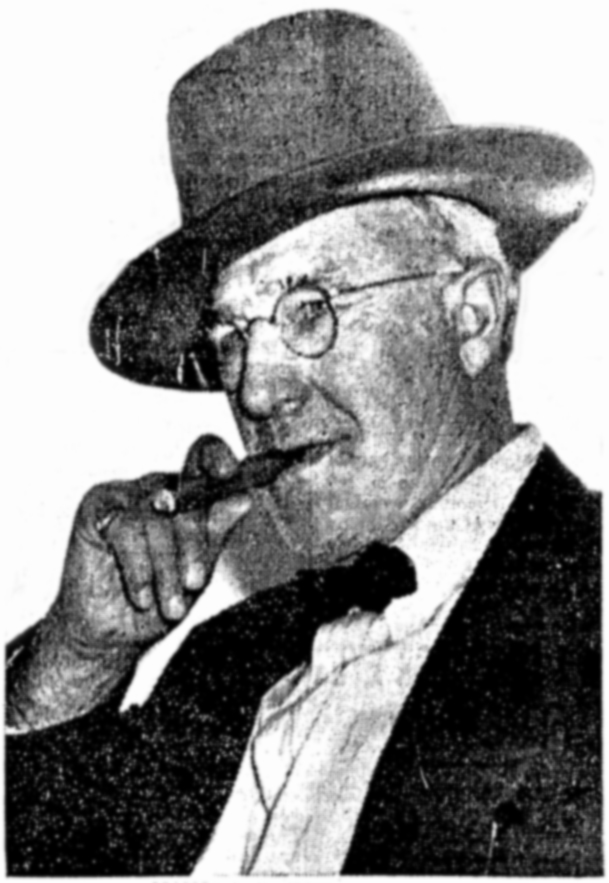
 |
| Harvey Allen Shanower (1884-1970). |
I knew about Harvey Shanower from an essay written by his great-niece, Sarah Elizabeth Rueckert Snyder (1907-?). It outlines the lives of the nineteenth and early twentieth century Shanowers of Massillon, Ohio. Her paragraph on Harvey concentrates on his employment in Massillon’s steel industry. I also knew that Harvey had married a woman named Florence Verla Hodnot (1897-1979).
But I’d never heard or read anything about Harvey strangling a wife named Edna—a woman, a marriage, and a crime that were completely new to me. Yet Harvey wasn’t such a distant relation. My grandfather Stanley Raymond Shanower (1917-1987) and his brothers attended the same Shanower family reunions that Harvey did. So I’ve known relatives who had opportunity at least to meet Harvey. But no hint of this sensational story had reached me before this.
As far as I’ve been able to determine, Harvey Shanower’s murder of his first wife was suppressed so completely that no one alive knew it had ever happened. I certainly understand why Harvey’s family and friends back in 1912 would have wanted to put this story behind them. But one hundred years later I don’t have any qualms about bringing this skeleton out of the closet for its centennial.
Harvey and Edna Shanower
Harvey Shanower grew up in Massillon, Stark County, Ohio, near Canton, and became a machinist by trade. About 1910 when he was twenty-six, he married twenty-one year old pianist Edna Hardgrove, and they settled in her home town of Barberton, Summit County, Ohio, near Akron.
Reports of their wedding are melodramatic. The unsubstantiated story is that Harvey ushered Edna at gunpoint from her parents’ home to a minister’s house where they were married. No one was notified of the wedding until nine days after it occurred.
Edna was popular with the people her age in Barberton, even after she became Mrs. Shanower. Her friends noticed that Harvey seemed to be a loving husband. He showered Edna with attention and always escorted her home when she played in the orchestra for local dances. Edna’s family, however, feared that Harvey’s intense relationship with their daughter masked an insane jealousy.
On Wednesday, November 27, 1912, the day before Thanksgiving, Edna cheerfully accompanied her mother, Sarah Ann Highton Hardgrove (1864-1930), an invalid for the previous four years, to Mrs. Hardgrove’s physician, Dr. Mansfield, to get medicine. Later that evening Edna played at a dance in Barberton given by the Maccabees, a fraternal order similar to the Elks and Eagles. A male friend of Edna’s asked her to play a certain piece, which she did. When the dance was over about 11:30 pm, Harvey scolded Edna for agreeing to the other man’s request, then as usual escorted his wife back to their home at 423 West Paige Avenue in Barberton.
Thanksgiving Without Turkey
 |
| Edna I. Hardgrove Shanower (1889-1912). |
A quarrel started early the next day, Thursday, November 28—Thanksgiving. In the morning Edna told Harvey that she had no meat for Thanksgiving dinner. Harvey offered to go to the market, but Edna told him not to bother. She refused to go to a restaurant for Thanksgiving dinner, but had no objection to his going without her. Harvey said he would stay home with her and eat whatever they had. Later Edna declined to go out for an afternoon walk, saying she didn’t feel good. After 4:00 pm she got a meatless supper ready, but refused to eat any of it. Harvey ate alone.
After dinner they reached some sort of truce. They went out to the movies and then picked up some sandwiches, eating at home and sitting up—not talking much—till about 10:30 before going to bed. Edna fell asleep right away, but Harvey, disturbed by their quarrelling, was restless. Not a very happy Thanksgiving for either of them.
Fatal Friday
On the morning of Friday, November 29, they overslept. Harvey had forgotten to set the alarm. He woke too late to get to work on time and decided to go in at noon. Harvey and Edna both got out of bed cross. After refusing to prepare breakfast, Edna announced that their marriage was a failure, that they could not make it work even if they tried for fifty years. They argued for hours. About 4:30 pm Edna told Harvey she could no longer live with him.
In a frenzy Harvey followed Edna upstairs to their bedroom where she put on her coat. He argued, pleaded, begged her to stay. But Edna’s mind was made up. She intended to go to her parents’ house.
Enraged, Harvey grabbed Edna’s throat and shook her. Edna fought, but she was no match for Harvey. As she struggled, his fingers closed around her neck. She collapsed.
Harvey couldn’t quite believe that she was actually dead, but he realized how terrible his actions had been. In despair he decided to kill himself. Perched on the edge of the bath tub Harvey wrote a letter to his younger brother Clarence David Shanower, Sr. (1889-1968), a letter full of remorse for “the deed,” as well as instructions about bills to be paid and debts to be collected. Then he gently tucked Edna’s body into bed and sat beside her, caressing her face, stroking the beautiful hair that had earned her the nickname “the bronze bride,” and begging her to wake up. Finally he had to face the fact that Edna truly was dead.
Harvey lost the nerve to commit suicide. He stuffed his letter into his pocket and left the house, intending to take the 5:54 pm train to Massillon to see his mother. But the train had been postponed, so he got a bite to eat before returning home for an hour. He straightened up the bedroom in an attempt to conceal all signs of struggle, then locked the front door behind him, and caught the 7 pm train.
 |
| Melissa Agnes Gerber Shanower (1861-1942) |
In Massillon he went to 1614 Kent Street, the home of his mother, Melissa Agnes Gerber Shanower (1861-1942). Her husband—and Harvey’s father—William Zachary Shanower (1855-1903) had died almost a decade before, leaving Melissa a widow. Melissa and Edna did not get along well, so Edna’s failure to accompany Harvey to his mother’s house was unremarkable.
Weekend at Mom’s House
Harvey betrayed no sign of stress or strain. On Saturday, November 30, he walked around town, greeting friends he passed in the street, arousing no suspicion whatsoever.
During the afternoon of Sunday, December 1, Harvey and his brother Clarence went to a football game in Massillon and ran into their cousin, George Louis Cecil (1885-1959), son of their aunt Mary Ann Shanower Cecil (1843-1931). Cousin George asked Harvey how Edna was doing. She’d been fine on Friday night when he left her, Harvey explained, betraying no hint of any weight on his conscience.
Monday Surprise
Over the weekend Edna’s invalid mother, Sarah Hardgrove, grew nearly frantic with concern. She and her husband, William, lived in Barberton, the same town where Harvey and Edna made their home, but they hadn’t heard a word from their daughter for days. At first William tried to calm Sarah’s fears, but by the afternoon of Monday, December 2, they were both worried enough to report their concerns to the Barberton police.
Barberton Chief of Police H. E. Eby and at least one police officer accompanied William Hardgrove to Harvey and Edna’s home about 7:30 Monday evening. The Saturday and Monday newspapers were still lying on the front porch. Eby entered the house using a skeleton key and found Edna’s lifeless body upstairs in bed, under the covers, still wearing her scarf and coat. Her throat had deep fingermarks and her left side was bruised. Barberton coroner R. C. Kenning confirmed death by strangulation and ordered Harvey's arrest for the crime.
Terrible Tuesday
Shortly after midnight the police woke the Shanower household in Massillon. They arrested Harvey on suspicion of murder and locked him up for the night in the Massillon police station.
Around noon on Tuesday, December 3, Massillon Mayor Arthur N. Kaley, Massillon Chief of Police Edward M. Ertle, and Barberton Chief of Police Eby subjected Harvey to an hour-long grilling in his cell. Harvey coolly maintained his innocence. Mayor Kaley confronted him with the letter found in his pocket, a letter that seemed to point directly to Harvey’s guilt. But Harvey steadfastly claimed that “the deed” referred to in the letter meant his contemplated suicide, not murder. He’d written it in despair after a quarrel with Edna had driven him crazy, he said, but she’d been alive and safe on Friday evening when he left her.
In spite of all circumstances pointing to Harvey’s guilt, his composure impressed his interrogators, as well as a reporter who was also present. Mayor Kaley was so impressed that when the session ended, he shook hands with Harvey and offered any help he could give.
After the interrogation, Chief Eby drove Harvey by automobile to Barberton prison. Word of the murder and Harvey’s arrest had spread. Although many who knew Harvey in Massillon found it hard to believe him capable of murder, the population of Barberton, where Edna and her family were well known, was hostile toward Harvey. Crowds formed around Barberton prison, waiting for Harvey’s arrival with Chief Eby. The Barberton police were summoned in order to quell any violence that might break out.
Just before 3:00 pm, Eby sped up to the prison entrance through crowds yelling threats to lynch the murderer. Harvey was hurried inside and placed in a cell. Barberton Mayor Mitchell held a preliminary hearing at which Harvey pleaded not guilty. A $10,000 bond was fixed and Harvey was bound over to the common pleas court.
Harvey begged to see Edna’s body one last time before she was buried. But city officials, aware of growing anger in the Barberton populace, were concerned for Harvey’s safety and refused his request.
Chief Eby hurried Harvey back outside into the car. The crowd shouted threats and photographers took pictures. Harvey tipped his hat over his face at first, but then changed his mind and raised his hat, displaying his calm for all to see.
 |
| I know this is a bad reproduction of this newspaper photo, but it's the best I have. Near the center Harvey Shanower gazes calmly from the car just as it's about to leave Barberton prison for the Summit County court house in Akron, December 3, 1912. Barberton Chief of Police Eby is to the right of Harvey at the wheel. Officer Kretzmer is to the left of Harvey in the back seat. On the extreme left is Officer Bart, one of the men who found Edna's body. The insert at top right is, of course, Edna. |
On the drive to the Summit County court house in Akron, Harvey completely reversed his position. He confessed to Chief Eby that he was guilty of the murder and promised to reveal the details when they reached Akron. At the court house Harvey took half an hour to relate the whole story to Prosecuting Attorney Frank J. Rockwell, Sheriff David R. Ferguson, and Chief Eby. Then he collapsed. He was taken to a cell in the Summit County jail and held without bail on a charge of first degree murder. Guards were stationed at the jail to prevent any attempt to lynch him.
Meanwhile, Edna’s body was taken in a white casket to her parents’ home on Baird Avenue in Barberton. Edna’s invalid mother, Sarah, was so hysterical with grief that two doctors were in constant attendance. The rest of the family would not allow her to see Edna’s body. They feared that the shock would kill her.
As Time Goes By
The next day, Wednesday, December 4, at 1:30 pm Edna I. Hardgrove Shanower was buried. Reverend U. M. Roby of the United Brethren Church conducted the funeral service at the Hardgrove home. It was one of the largest funerals Barberton had ever seen. The crowd was so large that Mayor William Mitchell stationed a squad of police around the house in case of trouble.
At the same time Edna was being buried, Harvey was back in Mayor Mitchell’s court in Barberton being arraigned a second time. On the advice of S. A. Decker, the Barberton attorney retained to represent Harvey, he pleaded not guilty, despite his confession of murder. He waived preliminary examination and was bound over to the next session of the grand jury. His brother Clarence met him at court in order to make arrangements for Harvey’s clothing in jail.
On Thursday, December 5, Harvey was noticeably gloomy in his Akron jail cell, all calm and composure gone. He barely touched his breakfast and paced back and forth in his cell, muttering to himself. Authorities feared he might attempt suicide, so a close surveillance was assigned to him. By this time they were more concerned that Harvey would kill himself than that someone else would.
The Summit County grand jury was scheduled to meet in January. A grand jury panel of fifteen men was selected on Friday, December 6.
On the following Thursday, December 12, Sarah Hardgrove was at last able to sit up and eat for the first time since hearing the news of her daughter Edna’s murder.
As the days passed, the public couldn’t stop talking about the murder. The Barberton populace seemed to hold no sympathy for Harvey, but in Massillon and Akron sympathy was widespread, in part because the murder had been unpremeditated. Even those with no sympathy for the confessed murderer hoped that he would be sentenced to life imprisonment rather than go to the electric chair. Rumors circulated that Harvey would plead insanity. But his attorney S. A. Decker maintained that he hadn’t yet formulated a defense.
Day in Court
The general sympathy for Harvey Shanower seemed to be shared by those who’d brought him to justice. Police Chief Eby confessed to feeling sorry for Harvey. Massillon Mayor Arthur Kaley expressed sympathy for a local boy in trouble. In January 1913 they were both among those called by the Summit County grand jury to testify in the Harvey Shanower case. Harvey’s cousin George Cecil appeared before the jury as well. On January 28 at 2:00 pm the grand jury indicted Harvey on a charge of first degree murder.
In early February Harvey was arraigned before Summit County Judge Ahearn where he entered a formal plea of not guilty. A trial was scheduled for Monday, March 17.
Attorney Decker seems to have been discharged, because on March 14, the Friday before the trial was to begin, Harvey and a new attorney, Judge Anderson, conferred with the Summit County prosecutor, who agreed to a reduction in the charge from first degree murder to second degree murder. Harvey appeared before Judge Ahearn, pleaded guilty to second degree murder, and was immediately sentenced to life imprisonment.
In the Pen
Late Monday, March 17, Harvey was transferred to the Ohio state penitentiary at Columbus to begin his sentence. But that was hardly the end of the story. Forces were at work behind the scenes.
James J. Wise was the former mayor of Massillon, Ohio, his hometown, and in 1912 he’d been elected State Senator. In May 1913 after visiting Harvey in the penitentiary, Senator Wise took Harvey’s regards back to the people of Massillon and reported that Harvey was considered a good prisoner and a hard worker.
By December 1915 things were looking up for Harvey. In Massillon, petitions for clemency had been signed by officials and employees of Harvey’s former manufacturing plant, the pastor and members of his former church, and other prominent citizens. The week before Christmas Senator Wise, along with Ohio Representative Milo Cathorn and Harvey’s brother-in-law Frank Stoner, brother of Clarence Shanower’s wife Icy May Stoner Shanower (1891-after 1933), interceded with Ohio Governor Frank B. Willis on Harvey’s behalf. Governor Willis agreed only to go so far as to turn the case over to the state board of pardons.
Harvey’s partisans refused to give up. Their efforts to free Harvey finally paid off. On June 26, 1917, James M. Cox, now Governor of Ohio, issued a pardon for Harvey Shanower. Harvey was free.
On July 9, 1920, Harvey, now thirty-five and employed by Russell and Company where he’d learned his machinist trade, married again, this time to Florence Verla Hodnot of Massillon. Their marriage lasted fifty years until Harvey's death on November 16, 1970.
That’s pretty much the story, exposed once more to the light of day for all to see.
Envoi
 |
| Gravestone of Florence Verla Hodnot Shanower Kirby. |
When I initially discovered the story of Harvey Shanower, strangler, I found it exciting. But in following the newspaper accounts through to his release from prison and second marriage, my feelings became conflicted. It’s kind of creepy the way Edna disappears from the story as if even the memory of her life was buried with her dead body. But there’s one consolation. If punishment is meant as a preventative, then Harvey’s time in prison—four and one quarter years—seems to have succeeded. His second wife Florence outlasted him by nine years, surviving to marry her second husband, Carl Kirby.
But poor Edna.
I trust that your Thanksgiving was more enjoyable than hers. I guess one lesson to be learned from this is to remember that if you’re cooking dinner next Thanksgiving, don’t neglect to put some meat on the table.