Sunday, August 18, 2013

Fort Rosecrans National Cemetery

Fort Rosecrans National Cemetery, west gate. The plot of Don and Amy Bartholomew is just behind the gate's left pillar.

I was intrigued to find that some of my relatives have graves in Fort Rosecrans National Cemetery. It's not that I have any thrilling or funny stories to tell about these relatives--I don't. I was intrigued because Fort Rosecrans National Cemetery is in the city I call home, San Diego, California. So I took a drive out to the cemetery to find the graves of Amy Consuelo Huss Bartholomew (1890-1984) and Robert Murray Schell (1930-1992).

Amy Consuelo Huss Bartholomew was my second cousin four times removed. Our common ancestors were her great-grandparents Noah Jacob Huss (1790-1843) and Mary Burkholder Huss (1789-1849), who are my five times great-grandparents.

On September 1, 1912, Amy Huss married Don Clio Bartholomew (1888-1959) in Lagrange County, Indiana, the county where they both were born. Don joined the US Army and rose to the rank of Major. They lived at different times in Fort Constitution, New Hampshire; Sable, Colorado; and in the Canal Zone of Panama, where their only child, a daughter, was born in 1923.

First side - Don Clio Bartholomew grave.
Reverse side - Amy Consuelo Huss Bartholomew grave.


When Don died in San Diego, California, in 1959, he was buried at Fort Rosecrans National Cemetery, in plot T-134. Several months before Amy died in 1984, she moved from San Diego to Carmichael, California, to be near her daughter. After she died, her ashes were returned to San Diego where they are buried in the plot with her husband Don. Her name is recorded on the reverse of their gravestone.

Robert Murray Schell grave.
Robert Murray Schell was my fourth cousin twice removed. We had the same common ancestors with Amy Consuelo Huss Bartholomew, Noah and Mary Huss, as I mentioned above. They were Robert Schell’s great-great-great-grandparents through both his paternal and maternal lines.

The paternal line from Noah and Mary Huss to Robert Schell goes like this: Noah and Mary had a daughter Barbara Elizabeth Huss Rathbun (1816-1894). She had a son Chaplin Lorenzo Rathbun (1845-1921). He had a daughter Nina Edna Rathbun Schell (1879-1951). She had a son Harry Gaylord Schell (1904-1951). Harry's son was Robert Murray Schell.

The maternal line from Noah and Mary Huss to Robert Schell goes like this: Noah and Mary had a son Christian Huss (1815-1864). He had a son Chaplin Rathbun “Chap” Huss (1838-1913). He had a son Burton William Huss (1869-1929). He had a daughter Helen Marjory Huss Russell Schell (1899-1987). Helen's second husband was Harry Gaylord Schell, and their son was Robert Murray Schell

Robert Schell became a Staff Sergeant in the US Air Force. His term of service was August 10, 1947, to August 10, 1951, and he served in Korea. His ashes were interred at Fort Rosecrans National Cemetery on March 4, 1993, in plot CBA-2-112. As far as I know, his wife is still alive. She moved to Gassville, Arkansas, after Robert’s death.

Fort Rosecrans Registered Historical Landmark plaque.

Fort Rosecrans is a registered historical landmark as well as a US military cemetery. It’s worth visiting just for the views, even if you don’t have any interest in the graves. The cemetery straddles the ridge of Point Loma, which encompasses the north side of San Diego Bay and sticks out into the Pacific Ocean. The road divides the cemetery into an eastern side and a western side.

In the center of this photo, between the trees, lies the historic red-roofed Victorian resort hotel, the Hotel Del Coronado, on Coronado Island.

The graves of Robert Schell and the Bartholomews are on the western side of the cemetery.  The Bartholomews’ gravestone is just inside the western gate to the left of the entrance drive, the fourth row from the cemetery wall, the fifth stone in from the drive. Although they’re on the western side of Point Loma, the hill curves so that their stone actually faces east, toward North Island, the bay, and downtown San Diego.

Looking east from Fort Rosecrans National Cemetery toward North Island, San Diego Bay, and downtown San Diego.

Robert Schell’s grave is within the cemetery wall high on the western slope. It commands a spectacular view of the Pacific Ocean.

Looking west from Fort Rosecrans National Cemetery to the Pacific Ocean. I took all these photos on the same day, but the sky over San Diego to the east was mostly clear, while the sky over the Pacific was overcast.

Sunday, August 11, 2013

Don Shanower and the Theater Ghost

Donald Thomas Shanower with a stylish pompadour in 1947.
My third cousin twice removed Donald Thomas “Don” Shanower (born 1921) has been involved in theater most of his life. The first plays I know that he acted in were The Gent and Auf Wiedersehen, two one-acts presented July 21, 1939, at Trinity Reformed Church in Canton, Stark County, Ohio, when Don was seventeen years old. I suspect that this wasn’t Don’s first foray onto the stage, since his father, Merl Frederic Shanower (1893-1949), was active in Trinity Church and had organized a Sunday School orchestra there two years before, in 1937.

After high school Don earned a bachelor’s degree at Kent State University in Kent, Ohio. He fought in World War II and was awarded a Purple Heart for being wounded in Belgium in 1945. In the late 1940s he returned to Kent State University as a graduate student and earned his master’s degree. While a grad student Don acted and directed for KSU’s University Theater and held office in Alpha Psi Omega, the national dramatics fraternity. In 1948, when Kent State teamed up with Hiram College to present plays on an old-fashioned showboat on the Ohio River, Don met Hiram student Patricia Ann Gibbs (born 1928). They married in 1951 while Don was a member of the department of speech at the College of Wooster.

Patricia Ann Gibbs Shanower, 1951.
In 1955 Don arrived on the campus of North Central College in Naperville, Illinois, where he joined the department of speech. He was in charge of the theater program at North Central until his retirement in 1986.

In 1966 Don directed his students in a production of a new musical Bligh Me with book and lyrics by Robert E. Lewis, who wrote scripts for such television shows as The Twilight Zone and Alfred Hitchcock Presents. The music was composed by John M. Danyluk. Hopes were high for Bligh Me, based on the historical Bounty mutiny, to reach Broadway. Virtually all of Naperville was excited to see the premiere on March 25, 1966, at North Central’s Pfeiffer Memorial Hall.

Playwright Bob Lewis’s ninety-two-year-old great-aunt was in attendance, sitting in seat G-42. As Diane A. Ladley wrote while recounting this incident in her book Haunted Naperville (Arcadia Publishing, 2009), “the lights dimmed. The audience hushed with anticipation. The orchestra began to play, the curtain rose, and the elderly woman in seat G-42—died.”

Don Shanower, right, the lead in Accent on Youth, Kent State University, 1948.
Don, standing in the back of the house, noticed a problem in row G. He and Dr. Glenn Wolf carried the woman out into the lobby, believing she’d fainted. In the lobby, however, they discovered instead that she was dead. They summoned an ambulance, but they couldn’t just leave the body lying on the lobby floor while they waited for the ambulance to arrive. If the body lay unmoved for too long, someone would notice. They didn't want the audience to grow alarmed. For lack of any other space, they carried the body into the cloakroom. It remained there until the ambulance arrived some time later—during the second act (according to Haunted Naperville) of a show that ran nearly four hours (according to a report in the Brookfield [Illinois] Citizen).

The ambulance took the body away, but the spirit of the woman who died during her grand-nephew’s show still haunts the theater on the North Central campus. Or so the story goes. She’s known as the Lady in White, and they say every once in a while she appears in seat G-42 to applaud enthusiastically during performances. Don claims that he’s never seen the Lady in White, but he knows how much the students enjoy the idea of a theater ghost.

Me and Don Shanower, October 2011.
The story of the Lady in White was recounted in the book I quoted from above, Haunted Naperville by Diane A. Ladley. Her version of the story, which starts on page 101, does its best to milk as much drama and spookiness as possible from the event. It gets a few details wrong, but it’s correct overall.

I ran across a comment on Haunted Naperville on the website of Powell’s Books, the huge and excellent bookstore in Portland, Oregon. In her comment, Diane Lewis-Bridge, daughter of Bligh Me playwright Bob Lewis, takes great exception to the incorrect facts in Diane Ladley’s version of the story. But the commenter gets a fact wrong herself when she says that Don Shanower had nothing to do with the production of Bligh Me. Don was the show’s director and was as delighted as his students to be working on the world premiere of a musical that was possibly bound for Broadway.

According to Don’s wife Pat Shanower, Haunted Naperville author Diane Ladley was occasionally associated with the Summer Place, a summer theater Don founded in 1967. She should have gotten the Lady in White facts right for her book. But when Diane Lewis-Bridge’s comment assumes “the rest of the book is a total fabrication,” I find that reaction a bit over the top.

Bligh Me never made it to Broadway, but Naperville is grateful for Don Shanower’s legacy to their community. In April 2002 the Shanower Family Softball Field was dedicated on the North Central College Campus to honor Don Shanower, professor emeritus of speech communication and theater, and his family. The Summer Place Theater, which Don founded, is still in operation. And if rumor has it right, the Lady in White, the single audience fatality in all Don’s years of theater directing, continues to haunt North Central’s Pfieffer Hall.

I visit Shanower Family Field at North Central College in Naperville, Illinois, August 2012.

Sunday, August 4, 2013

The Four Wives of Homer Woodland

Homer Floyd Woodland (1898-1959) lived a life marked by chaos and change. He was not one of my blood relatives, but two of his four wives were. Homer's first wife was the sister of my great-grandmother. Homer's second wife was the sister of my great-grandfather. Researching their family lines was how I first learned of Homer. The secrets of his fractured life still reverberate down the generations.

Homer Woodland's Parents
Ellis Doty and Alta Lucinda Flowers Doty Woodland.

Homer Woodland’s mother was Alta Lucinda Flowers (1870-1929). Alta was clearly not my blood relative, since her son Homer wasn’t. But I have a connection by marriage to Alta separate from my connections to Homer. Alta’s first husband was Ellis Doty (1861-1895). Ellis Doty's fourth cousin three times removed was Aaron Doty (1807-1843). Aaron Doty married Polly Grandy (abt 1805-1838). Polly was my five times great-aunt. So that’s my connection to Alta.

The common ancestor of both Ellis Doty and Aaron Doty was Edward Doty (1599-1655), passenger on the ship Mayflower. Edward Doty was a six times great-grandfather of Ellis Doty and he was a great-great-grandfather of Aaron Doty. During the Mayflower's Atlantic crossing Edward Doty was a servant of Stephen Hopkins (abt 1580-1644), who also happens to be connected to me by marriage.

After the death of Alta's first husband Ellis, she married William Henry Woodland (1866-1931) in 1897. According to Woodland family stories William's relationship with Alta was very violent. Nevertheless, William and Alta had six children—Homer Floyd Woodland was their first—and remained together until Alta’s death in 1929. William died of dropsy two years later. Alta and William are both buried in Evergreen Cemetery in Painesville, Lake County, Ohio, where so many of my relatives are buried.

Homer Woodland’s Birth

Homer Floyd Woodland was born on September 27, 1898, in Madison County, Ohio—I think. Different sources report different locations for his birth. Censuses report that he was born in the township of Pike in Madison County. One of his marriage licenses says he was born in Rosedale, an unicorporated community in Pike Township. The evidence seems to weigh most heavily toward Rosedale as Homer’s birthplace. Another source reports the community of Lafayette in Madison County's nearby Deer Creek Township as Homer’s birthplace. Yet another source claims the village of Perry in Lake County, Ohio. But I suspect these are incorrect.

Homer was born into a household that already had one child, the daughter of Alta and her first husband Ellis, Elsie Ellen Doty Slee (1894-1974). Elsie Doty was a half-sister to Homer Woodland and they spent parts of their childhoods together. Homer’s five younger brothers and sisters were born over the next twenty years. Homer was married to his first wife by the time his youngest sister Catherine E. Woodland Skiba (1918-1996) was born. Despite this difference in age, as adults Homer and Catherine spent time together. Yet Catherine’s obituary has no mention of Homer, although it mentions the rest of their siblings. Is this omission evidence for Homer’s fragmented life or a simple oversight?

Homer Woodland’s First Marriage

The five Salo sisters. Ida Justiina Salo Woodland  is on the top right. My great-grandmother, Edla "Edna" Salo Hietanen, is seated at lower left.

On June 30, 1917, Homer enlisted in the National Guard. Less than two weeks later he married Ida Justiina Salo (1894-1967) in Lake County, Ohio. Homer was still a minor at nineteen years old and his father had to register his consent to the marriage.

Homer Woodland and Ida J. Salo Marriage License, 1917.
Ida, at twenty-two, was the elder partner in the marriage. Her parents, Isakki Salo (1854-1908) and Helvi Serafiina Saaminen Salo (1860-1907), had both passed away in the first decade of the twentieth century. Ida was their youngest daughter, and in 1910 she’d been living with her second eldest sister, Edla Susanna “Edna” Salo Hietanen (1884-1961), and brother-in-law Matti “Matt” Hietanen Jr., (1883-1921) my great-grandparents. (You can read about Matti's suspicious death here.) By the time of her marriage, however, Ida was working as a housekeeper, location unknown

Homer and Ida’s daughter Dorothy Helmi Woodland Gray (1917-1992) was born less than five months after their marriage, so it looks like Ida conceived out of wedlock. Knowing my family history in similar cases, I think Homer and Ida were probably pressured by family members to marry in order to save face within the community of Fairport Harbor, Lake County, Ohio, Ida’s birthplace. The Helmi portion of Dorothy's name probably came from Ida’s next older sister Helmi Sofia Salo Lahti (1890-1961).

One family researcher records that Homer and Ida also had a son, Dennis Woodland. But I can find no confirmation of Dennis’s existence.

Homer in uniform, Cleveland lakefront, 1917.
Homer fought in World War I with the American Expeditionary Forces in France. He was a private first class in the 166th Infantry, 42nd Division. He fought in the Champagne-Marne campaign, July 15 to 18, 1918. During the Aisne-Marne campaign of July 18 to August 6, 1918, he was slightly wounded. Then on September 21, 1918, he was severely wounded. He was discharged honorably on February 25, 1919, with a fifteen percent disability.

While Homer was overseas something prompted Ida to send him a “Dear John” letter, and on July 15, 1921, they were divorced. Within a few years Ida married her second husband, Lawrence E. Armstrong (1898-1976). Ida and Homer’s daughter Dorothy lived with the Armstrongs and took their last name as her own. Ida and Lawrence had two children, Jean Armstrong Gilcrest (born abt 1927) and Robert F. Armstrong (1929-1998). In 1942 Ida and Homer’s daughter Dorothy married Delmar Anson Gray (1918-1944). They had a son in 1943. Delmar died in battle while serving as first Lieutenant with the US Army Air Corps 385 Bomb Group, 551 Bomb Squadron in World War II, leaving Dorothy a widow. She died decades later in 1992. Her son seems to still be living.

Homer Woodland’s Second Marriage
Cecelia F. "Selfa" "Celia" Hietanen Woodland (1902-1925).

Sometime in the second half of 1921 Homer married his second wife, Cecelia F. “Celia” Hietanen (1902-1925), who was still in her teens. Celia was the daughter of Matti Uhmusberg Hietanen Sr. (1859-1915) and Liisa Kristiina Herttua Hietanen (1861-1943), my great-great-grandparents. Celia’s brother was my great-grandfather Matti Hietanen Jr., husband of Edna Salo and brother-in-law of Homer Woodland’s first wife Ida. (Above I mentioned Matti Jr.'s questionable death.)

Homer and Celia had no children. At age twenty-three Celia died of pulmonary tuberculosis, April 15, 1925. Although Homer and Celia made their home in Cleveland, Ohio, Celia died at the home of her mother in Painesville, Ohio. Two days later she was buried in Painesville's Evergreen Cemetery. According to the account of her funeral most of her living siblings and their spouses attended, along with other relatives. But there’s no mention of her husband Homer, her in-laws who were both still alive, or any of Homer’s brothers or sisters, most of whom lived in Lake County or close to it. Why didn't any of Homer's family attend his wife's funeral? Were Homer and Celia estranged by the time of her death? It seems likely.

Homer Woodland's race car in the 1920s.
Incidentally, Homer’s occupation was listed as “Driver” in city directories of both Columbus, Ohio, in 1914 and Cleveland in 1925. But what did “Driver” actually mean? The race car that Homer owned in the 1920s might be a clue. But he was also a bus driver in 1928.

Homer Woodland’s Third Marriage

Fayme E. Smith (1898-1965) was Homer’s third wife, a daughter of European immigrants Peter N. Smith (1860-?) and Victoria Sonnie Smith (1867-?). Like Homer, Fayme had been previously married. On December 31, 1919, Fayme wed Robert D. Britt (abt 1898-1965), but they were divorced by 1926 when Marceau Carr became Robert's second wife. Robert and Fayme may have been divorced as early as 1920 when Fayme was living with her brother William E. Smith and his family in Cleveland. In 1921 she was working as a stenographer and listed under her own name, not a husband’s, in the Cleveland city directory.

Homer Woodland and Fayme Smith Marriage License, 1928. Notice it only records one of Homer's two previous marriages, the one to Celia, since the wife is deceased. Is this an oversight or more evidence for Homer keeping secrets?

Homer married Fayme on October 13, 1928. They had no children. By 1930 Homer was living as a roomer, evidently separated from Fayme, but still married to her. Fayme was living without Homer in the household of another of her brothers, Walter J. Smith. By the end of 1930 they were divorced. In 1940 Fayme was living, still single, in the household of yet another of her siblings, her sister Amelia H. Smith Frey. I don't think she ever married again before her death on January 8, 1965.

Homer Woodland’s Fourth Marriage

Helen Gertrude Croyle (1908-2008) was Homer’s fourth wife. They married on December 24, 1930, in Helen’s hometown of Kittanning, Armstrong County, Pennsylvania. Homer and Helen lived in Cleveland, Ohio, and had two children, a son Dale Edward Woodland (1932-2010) and a daughter who’s still living. Whatever problems had led to Homer’s previous divorces didn’t seem to adversely affect his marriage to Helen. They remained together until Homer’s death on November 8, 1959.  About 2005 Helen left Ohio for South Carolina where her daughter and son-in-law live. She passed away on August 6, 2008, at the age of ninety-nine.

Helen Gertrude Croyle Woodland, Dale Edward Woodland, Homer Floyd Woodland, and the daughter born to Helen and Homer, at home in Cleveland, Ohio, 1941.

After Homer died, Helen shocked her daughter with the news that Helen had been Homer’s fourth wife. I recently contacted that same daughter and shocked her again by asking about her half-siblings Dorothy Woodland Gray and Dennis Woodland. She had heard only a vague mention of a single half-sibling and now assumes that meant Dorothy. Dennis, if he existed, remains elusive. Dennis may instead be Dorothy's son, not her brother.

[Update, August 8, 2013: I have confirmation that Dennis is the son of Dorothy Woodland Armstrong Gray and Delmar Anson Gray, not Dorothy's brother. There was no Dennis Woodland born to Homer and Ida Woodland.]

Homer Woodland’s Legacy

Homer F. Woodland initially captured my interest when I realized he’d married two of my great-great-aunts, already sisters-in-law when each married him. But in digging deeper, I found Homer and his multiple families even more interesting. He was clearly a man who kept secrets, even from close family members, a habit, I suspect, that may have contributed to his divorces. Even his daughter could be shocked by newly revealed information nearly half a century after his death. That makes me wonder what secrets Homer may have left that have yet to be uncovered.

Sunday, July 28, 2013

Charles Arden Muehleisen, 1920-2013

Charles Arden Muehleisen (1920-2013)
My first cousin twice removed Charles Arden Muehleisen passed away on July 11, 2013, at his home in Cortland, Ohio.

Charles was born July 11, 1920, in Cuyahoga Falls, Ohio. Our common ancestors were his grandparents William Malcolm McNaughton (1850-1914) and Mary Elizabeth Grant McNaughton (1856-1946), his mother's parents. They were my great-great-grandparents, my father's father's mother's parents. By profession Charles was an architect and ran his own firm for twenty-five years, before retiring in 2001. He served in the US Army in World War II and was active in several community organizations, including the Warren (Ohio) Rotary, the Boy Scouts, and the First United Methodist Church of Warren. I never met him.

Charles married Peggy E. Patton (1918-1992) in 1948. They had two daughters, Debra Elayne Muelheisen Rodriguez, who passed away in May 2012, and Beth Arden Muehleisen Ensign, who put together with her niece Barb Rodriguez and her son Andrew Ensign a lovely memorial video, which you can view here.

A memorial service was held on July 18. The family suggests memorial donations to the First United Methodist Church of Warren, 309 N. Park Avenue, Warren, Ohio 44481, or to The Rotary Club of Warren, P.O. Box 68, Warren, Ohio, 44482.

Sunday, July 14, 2013

Spirit of Finland

The Finnish Heritage Museum in Fairport Harbor, Ohio, is planning to erect a sculpture at the front of the museum. Titled "Spirit of Finland," it has been designed by Ken Valimaki, a 1955 graduate of Fairport Harding High School. The Finnish Heritage Museum website has a photo essay of the sculpture in progress. You can see that here.

Funds for the sculpture itself are in place, but additional funds for the base, the security system, and the lighting still need to be raised. Any amount you might wish to donate is welcome. The names of all donors at any level will be recorded in a memory book at the Finnish Heritage Museum. Donors at the $250 to $499 level will also have their names listed on a plaque outside near the sculpture. Donors at the $500 plus level will have their names listed on that plaque in larger type. Click here for the online donation form.

I have strong connections to Fairport Harbor, Ohio. Many of my maternal relatives were immigrants from Finland who ended up in Fairport. I've visited Fairport many times and still have many relatives there and in the area, including the current vice-president of the Finnish Heritage Museum, Ken Quiggle.

I'm proud to say I've written my check for a donation to the Spirit of Finland fund. Whether you're the descendant of Finnish immigrants to the USA or interested in preserving immigrant history or simply an art lover, I hope you'll consider donating, too.

Sunday, May 5, 2013

My Famous Relatives: Mayor Piola L. Leifer

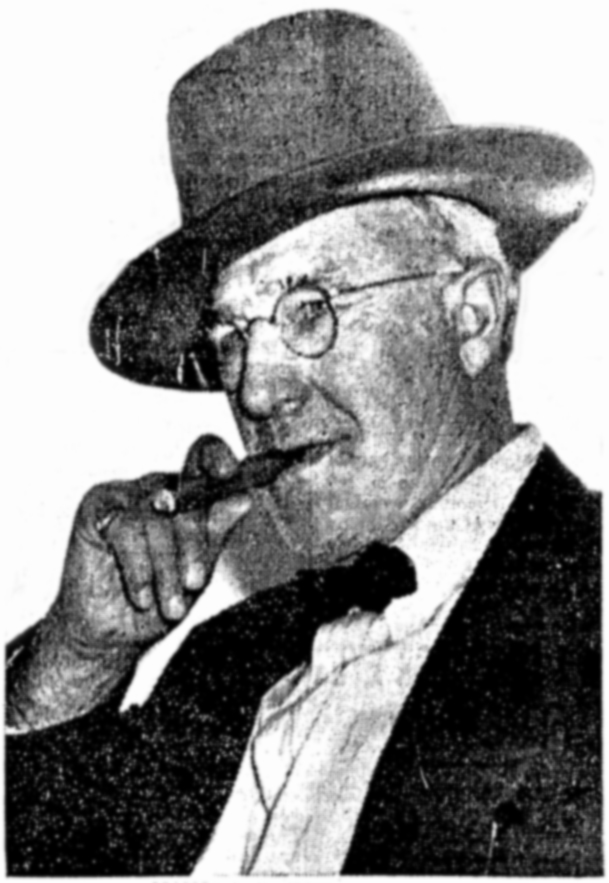
Mayor Piney Leifer (1873-1942) in a 1938 newspaper photo.
My first entry in this "Famous Relatives" series of blog posts was about the actor Richard Gere. But the majority of my famous relatives are nowhere near as famous. Famous is an elastic term. For the purposes of this blog, I’m going to consider someone famous as long as that person performed some sort of career or accomplishment in the public eye, even if that public was relatively local.

My first cousin three times removed, Piola Leroy “Piney” Leifer (1873-1942), was the mayor of the small town of Brewster in Stark County, Ohio, where he lived virtually his whole life. He first won election as mayor in the fall of 1930 for the term that began January 1, 1931. Evidently he was quite popular with the voting citizens of Brewster, since he was re-elected five more times. He filled the office of mayor for six consecutive terms until his death in 1942 interrupted the sixth term.

Piney Leifer was born in Justus, Stark County, Ohio, the child of Swiss immigrant Jacob Leifer (1842-1922) and his wife Katharine Ann Werstler Leifer (1839-1904), and he was the nephew of my great-great-grandmother Louisa “Lucy” Leifer Shanower (1856-1916). Before he entered politics, Piney was a farmer and a prominent horse and cattle dealer. I don’t know why he left that career to run for mayor of Brewster, but the timing of the career change suggests that perhaps his horse and cattle business was hit hard by the Great Depression.

The Depression years of the 1930s were difficult all across the USA, but Mayor Leifer performed the feat of keeping the village of Brewster financially solvent throughout his mayoralty. Only a few other Ohio municipalities of that period could boast the same feat. During Piney Leifer’s administration Brewster, Ohio, built a waterworks system, sanitary sewers, a sewage disposal system, and a municipal building. Brewster paid off the debts from this construction and built up its bank account.

Mayor Leifer also had the village implement a locally operated power system, distributing power purchased from the Ohio Public Service Company to residents. The income to the village from resales of power funded village improvements, but after the new municipal building was paid for, the village cut the charge for power by fifty-five cents a month for average consumers.

These accomplishments during one of the worst economic periods in US history gained Piney Leifer statewide prominence. He explained his successful guidance of Brewster like this: “The real secret of municipal financing is to get at least seventy-five cents value out of each dollar spent.  Here in Brewster we try to get a value of at least eighty-five cents on every dollar we use.”

Several months after Piney Leifer was elected mayor of Brewster for his sixth term, he grew ill. He never married, so he moved in with his sister Celia Catherine Leifer Roush (1876-1948) and her husband Andrew Jacob Roush (1874-1954). Nine months later, on December 16, 1942, he died at their Brewster home.

His successful guidance of the village of Brewster through the tough Depression years became his legacy. “Think how much interest would be saved if municipalities bought things only when they could pay cash for them,” he was quoted in the Canton [Ohio] Repository, October 9, 1938. “We pay as we go—that’s our system.” Still good advice—and not just for municipalities, but for individuals, too.

Thursday, May 2, 2013

The Mystery of Henry Shanower: A Solution

In my very first post for this blog, I asked the question: “Who was Henry Shanower?” That’s a question that Shanower family researchers keep running up against. We can trace the Shanower genealogy back to Henry Shanower, who died sometime in the early 1800s in Adams County, Pennsylvania. But no one has been able to determine Henry’s parents, much less siblings—or even the name of a wife.

It’s not as if there are no records of earlier Shanowers. There are plenty. Spellings of the last name vary widely—Shonower, Shonauer, Schoenauer, even Shinaver. Records of earlier Schonauer generations extend back through Germany to Switzerland in the 1500s.

So there’s a gap between the two sections of the Shanower family tree. How does Henry Shanower connect to the earlier Shanowers? That’s the big mystery.

After many months of sifting available evidence, I've come up with a possible solution. I want to stress that this is simply a possible solution. I can’t claim that it is the solution. I don’t know whether anyone will ever be certain of that, since so far there’s no proof.

I’ll begin with the three known Schonauer immigrants to the USA in the 1700s:

1. Anna Schonauer
2. Jost Schonauer (1707-1777)
3. Hans "John" Schonauer (1688-1749)

Anna Schonauer, #1, can be discounted as Henry’s direct Shanower ancestor because any children she had would have carried her married name, Gehman.

Jost Schonauer, #2, arrived in the USA on the ship Phoenix in 1754, very possibly in the company of Anna Schonauer. But women weren’t generally listed in passenger lists, so who knows? Jost was probably a relative of Anna, perhaps her brother, but I have no proof of that. Christian Gehman (Geimmer), Anna’s husband-to-be, was on that Phoenix voyage, too, so maybe they were all traveling together. Jost’s descendants have been pretty well traced by his great-great-great-great-grandson Robert Cole and there doesn't seem to be any point where the Henry Shanower branch of the family fits among them. Other details indicate these two branches of descendants are distinct. Jost’s early descendants lived and died in Berks County, Pennsylvania—mostly in Cumru Township—while Henry Shanower died in Adams County. Jost's line was Lutheran while Henry's line seems to be German Reformed Brethren. And the spelling of the Shanower name evolved differently in Jost’s branch. It’s unlikely that Henry Shanower was Jost’s descendant.

That leaves Hans "John" Schonauer, #3, who was Jost Schonauer’s uncle. Hans "John" seems to be the best bet as the immigrant ancestor of the Henry Shanower branch of the family. Hans "John" and his immediate descendants lived in Lancaster County, Pennsylvania—mostly in Cocalico Township—as opposed to the Jost Schonauer line in Berks County. Hans “John” and his wife Ursula (abt 1690-abt 1773) had several daughters, who did not pass down the Schonauer name. They also had three sons:

1. Christian Schonauer (1717-bet 1764 and 1770)
2. Abraham Schonauer (1722-bef 1762)
3. Jacob Shonauer (1724-1764)

Christian, #1, didn’t marry and seems to have had no offspring.

Abraham, #2, had no sons. He and his wife, Barbara Graff Schonauer (1731-unknown), had three daughters, but none of the daughters passed down the Schonauer name, of course.

Jacob, #3, however, seems to have fathered three children with his wife Maria Magdalena Haldeman Shonower Van Gundy (abt 1738-1820). Here they are in reverse order of their births:

1. unknown (1764-unknown)
2. Barbara Shonower (abt 1762-unknown)
3. John Shonower (abt 1760-unknown)

Child #1, unknown, was not yet born when its father Jacob died in 1764 in Lancaster County, Pennsylvania. This child has seemed to Shanower family researchers Vel Shanower Kirchner and Dan F. Shanower to be the best candidate for the identity of Henry Shanower, and until now I’ve agreed. However, I’ve found no evidence that this child even survived childbirth, and the only gender I've seen associated with this child is female, although I don’t know whether that’s proven. If she lived to have children, a female wouldn't have passed down the Shonower name.

Barbara, #2, was certainly female and wouldn't have passed down the Shonower name.

That leaves John Shonower, #3, the eldest of these three children, born about 1760. John left records of his existence. In 1774 at fourteen years old he inherited whatever was left of his father Jacob's estate. He belonged to the Lancaster County Militia in 1785 and may have fought earlier in the American Revolution. In the 1780s he paid taxes on land in the municipalities of Warwick, Bethel, and Cocalico, all in Lancaster County, Pennsylvania. In 1781 he married Elizabeth Handshue (bef 1767-unknown) in Cocalico Township.

John Shonower, here spelled Shonauer, belonged to the 2nd Regiment, 6th Battalion of the Lancaster County, Pennsylvania Militia during the fall of 1785. His name is last on the right-hand page. Click picture to enlarge.

Who were John Shonower and Elizabeth Handshue Shonower’s children? I don’t know. Maybe they didn’t have any, but that would have been unusual for a married couple in Lancaster County, Pennsylvania, in the late 1700s.

John Shonower, here spelled Shownauer, is listed fourth on this page in the Cocalico Township, Lancaster County, Pennsylvania, tax list for 1785.

So here on one hand is childless John Shonower, born about 1760. And on the other hand is parentless Henry Shanower, likely born about the same time as John, since Henry’s only known child was born in 1785.

If only Henry's child, Jacob Shanower (1785-1829), had been a son of John and Elizabeth, not a son of Henry! If only John had actually been Henry!

Wait a minute—let’s take a closer look at Henry Shanower.

The source of the name Henry Shanower (Shaneour).
Where did the name Henry Shanower come from? The only recorded evidence I know of for Henry is in the 1888 book Portrait and Biographical Album of Hillsdale County, Michigan. Henry Shaneour is said to be the father of Jacob Shaneour and the grandfather of David Shaneour (1812-1897). (You’ll notice the spelling of the last name has evolved again. David Shaneour deliberately changed it after he quarreled with the rest of his family.) How reliable is the information in Portrait and Biographical Album of Hillsdale County, Michigan?

Books filled with short biographies and sometimes photographs of prominent residents of Midwestern counties seem to have been all the rage in the late nineteenth and very early twentieth centuries. Every county had to have one. They are a great help for general genealogical guidance—but for guidance only. They are not reliable evidence. Their information must be verified by external sources before it can be counted on as true. These biographies contain mistakes, as I've found time after time, especially mistakes about earlier generations.

To cite one example from David Maxine’s family, one of these biographical albums from Kentucky mentions his great-great-great-great-grandmother Amah Anna Lawrence. Only it doesn’t call her by that name, it calls her Lawrence Slainks. It’s clear where the “Lawrence” part came from, though not why the writer thought it was her first name. But one can only imagine where the name “Slainks” came from, since it doesn’t occur in David’s family. I suspect someone provided notes in really bad handwriting to the writer of the entry, who deciphered the scribbles as “Slainks.” Whatever the case, the name Lawrence Slainks has spread like a weed through family trees across the internet. But it’s incorrect. David’s research proves that.

So could the name “Henry Shanower” be wrong, too? I think it’s possible, even probable. I even have a logical explanation, although I need to make it absolutely clear that this is speculation.

Portrait and Biographical Album of Hillsdale County, Michigan says that Henry Shaneour's son Jacob married a woman named Elizabeth Henry. Think about that—a daughter-in-law with a maiden name of Henry—a father-in-law with the first name of Henry. Could that be one Henry too many? Elizabeth Henry’s name has been independently corroborated. So if there’s a mistake, then it must be with Henry Shaneour’s name, a name recorded nowhere else that any Shanower family researcher has discovered. I think that the person who wrote this biographical sketch somehow got the information mixed up and mistakenly assigned Elizabeth's maiden name, Henry, as the first name of her father-in-law. And so Henry Shanower was invented by accident. He’s a transcription mistake.

My solution to the Henry Shanower mystery is that there wasn’t anyone named Henry Shanower.

Then who was the father of Jacob Shanower, born 1785? I propose that his father was actually John Shonower, husband of Elizabeth Handshue Shonower.

This solution fills the gap and leaves no loose ends. There's geographic plausibility, since the Pennsylvania counties where these Shanowers lived—Lancaster, York, and Adams—are all adjacent. But there’s no proof, no evidence for this solution. There’s only lack of contrary evidence—plus the suggestion of a continuity of first names in this Shanower branch.

The continued use of first names in successive generations of a family line can give guidance in determining genealogical ties. A continuity of names is far from proof, but it can be a clue to family relationships, especially among the Pennsylvania Dutch in the eighteenth century. In this case, there are three names to consider:

1. Henry
2. Jacob
3. John

The name Henry, #1, doesn’t occur anywhere else in the Shanower/Schonauer line until much later—in 1859 among Jost Schonauer’s descendants and as David Henry Shanower’s middle name in 1881. Yet other names, such as John, Christian, Anna, and Barbara, were repeated from one generation to another. However, it’s dangerous to draw any conclusion from this. Other Schoenauer names—such as Melchior and Nichlaus—aren't repeated either. And there may have been Henrys in maternal lines I don't have information about.

In contrast, the name Jacob, #2, occurs on both sides of the Henry Shanower gap—both among the sons of immigrant Hans “John” Schonauer, as well as among the descendants of the reputed Henry.

The name John, #3, also occurs repeatedly on both sides of the gap. If John Shonower, born about 1760 and husband of Elizabeth Handshue Shonower, is actually the father of Jacob Shanower, born 1785, then there would be a case of John (Hans) Schonauer having a son Jacob who had a son John who had a son Jacob who had a son John. Talk about continuity!

In closing let me repeat that this solution—that Henry is in fact John—is speculation. There’s no proof. But considering the available information, I believe there’s no better candidate for the identity of Henry Shanower than John Shonower.